The Future Economy of Caring
Goose Group is two people. We want better tools, interesting lives, and enough room in our heads to do excellent work for people we care about. Staying small is part of that strategy.
Freedom and space make the work better. We bring our lives to it: what we’ve seen, read, made, enjoyed and got wrong. Following an interest gives us more to draw on. Having room to think lets us connect those experiences with what another person needs.
Those experiences are worth having in themselves. They also enrich our judgment, our imagination and the things we make. A full life gives us something to bring to the work; a full calendar can leave very little room to use it.
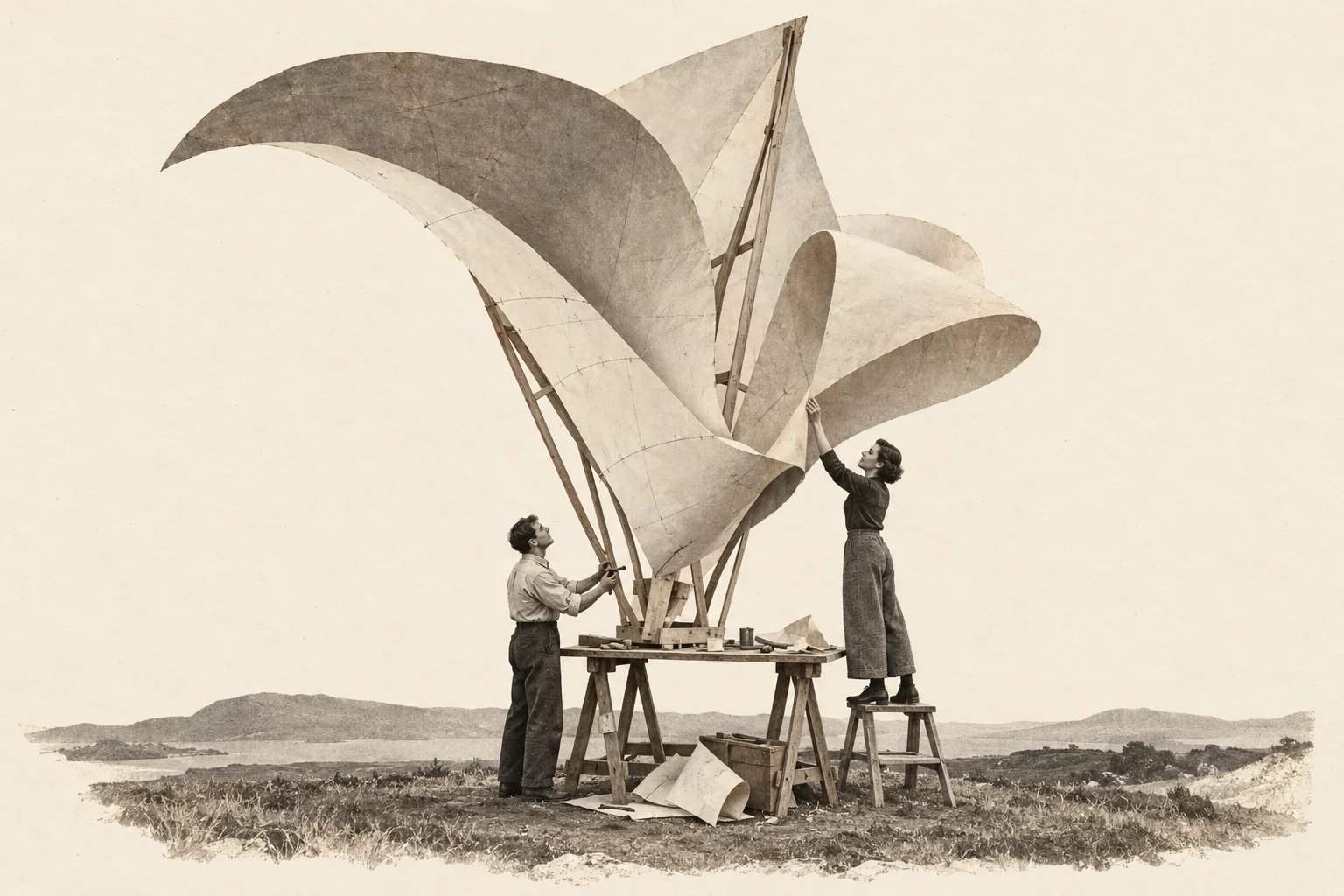
Innovation gets a surprisingly boring brief: build a widget that makes the current process faster. We want to think bigger and weirder about what becomes possible. We can use the same imagination and technical ingenuity to give something more thought, make it more personal, or follow a possibility nobody has asked for yet. Sometimes that means spending longer on a detail or making something excellent for very few people.
Care changes how we use the capability. An hour saved can become an hour spent understanding someone’s situation, trying an unexpected approach, or getting a detail right. The result can have more substance because we gave it more of ourselves. We want room to make those choices, including when the spreadsheet would prefer another widget.
Learning to use AI well is important to this strategy. We need a vision of what would be worth doing, an understanding of the capabilities available, and the imagination to put them together. Then we need to try things, reflect on what happens, and let what we learn change the work. That combination lets two people attempt work they couldn’t otherwise do.
The work itself gives us new experiences and changes what we can imagine doing next. Sometimes care means staying with something while your idea of “good” catches up. A first attempt may disappoint us and still contain something worth pursuing. We might discover that the part we thought was incidental is what somebody loves, or that a mistake has taken us somewhere more interesting. Those encounters can change the ambition, the result, and our judgment of both.
That patience matters when someone brings us an idea, too. We can help them try it, take an awkward first version seriously, and let their way of seeing change ours. We want to work with people who make us more curious about what we could attempt together.
Staying small keeps the care precise. We can know the people involved and carry what matters to them into the work. Growth can stretch that attention, broaden the promise, and put more distance between us and the result. We want to remain close enough to notice when something isn’t right and able to change it.
Something can be worth building for a few. Knowing who it’s for lets us follow their particular interests and make choices that don’t need to appeal to everybody. Better tools let us do that with more range and ambition. Shared infrastructure can be enormous, and agents can help the right people find one another, while the human arrangement stays small.
We charge for our time so we can keep doing this. The company supports the people and the work, including interests and gifts that never become an invoice. We want it to leave us with enough time and energy to remain curious, generous and good company.
That’s the strategy: stay small, become very capable, and protect the freedom that gives us more to bring to the work. We want to use it to attempt bigger, stranger things, with enough care to let the work change us and to make something excellent for the people involved.
Original editorial illustration generated with AI for this essay.